 BEHIND THE CAMERA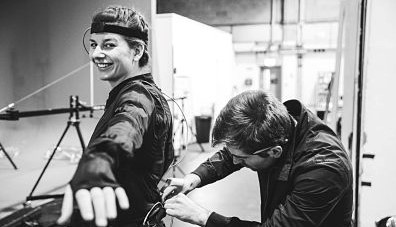
One of the more recent developments in VFX is motion capture. This technique combines real world motion with computer-animation software, making it a very useful tool in filmmaking, game development and even physical wellness (e.g. rendering gait for physical therapy). For VFX, it uses a ‘mocap’ suit to take data from the actor and apply it to a CG character, such as Gollum from Lord of the Rings. Widely regarded as one of the most famous mocap performances, Andy Serkis is able to transform into the small, unsettling creature via this technology.
There are several different types of motion capture. One is called optical mocap, and it comes in two forms. Passive optical mocap uses reflective markers, like the famous reflective ping pong balls that jump into our minds, to reflect light. Multiple special cameras detect the reflections, translating them to computer animation. Active optical mocap, instead of using reflective markers, uses light-emitting markers such as LEDs which a camera picks up on. This is useful when conditions make seeing the markers difficult, such as dim lighting or the outdoors. There is also marker-less technology which uses computer algorithms to calculate motion rather than markers, however, it is more prone to error. Lastly, there are inertial mocap suits that don’t require cameras because they use technology within the markers to analyze motion. Inertial sensors like gyroscopes, magnetometers and accelerometers record motion in IMUs (inertial measurement units). All types but marker-less motion capture use specialized suits to read the actor’s movements - often called mocap suits. Altogether, these techniques make up the popular motion capture method that is revolutionizing filmmaking as we know it.
What does motion capture allow us to do? Specifically, it facilitates the animation of 3D characters in all types of media. Instead of modeling and rigging a character entirely via a computer program, VFX artists can get a head start by having the movements already generated. Moreover, it has been the root of advancements in organic, natural motion. Take Marvel’s Avengers Endgame (2019) and the introduction of the ‘Smart Hulk.’ Here, Mark Ruffalo is suited up in both a mocap body suit and facial markers. His acting is applied to the 3D rendered Hulk character to create a seamless, realistic performance. Motion capture was even thriving back in 2015 with the release of the video game Until Dawn. This interactive, horror game uses motion capture to place eight actors into a choice-based storyline. Using only motion capture to render the actors, Until Dawn utilizes the life-like movements and facial expressions to relate to audiences and to enhance the fear factor. Check out this behind-the-scenes documentation of Until Dawn: